
Planning a gorilla trekking safari to Uganda is one of the most exciting travel decisions you will ever make. But before you pack your hiking boots and book your flights, there is one essential item to sort out well ahead of your departure date — your Uganda visa. Getting your visa right from the start ensures a smooth, stress-free arrival so you can focus entirely on the extraordinary wildlife experiences that await you.
This complete Uganda visa guide covers everything you need to know — the types of visas available, who needs one, how to apply, how much it costs, and practical tips that will save you time and hassle on arrival.
Do You Need a Visa to Enter Uganda?
The vast majority of international visitors to Uganda require a visa to enter the country. Uganda operates a fairly straightforward visa system, and for most nationalities the process is simple and entirely manageable — particularly now that the e-visa system allows you to apply online from home weeks before you travel.
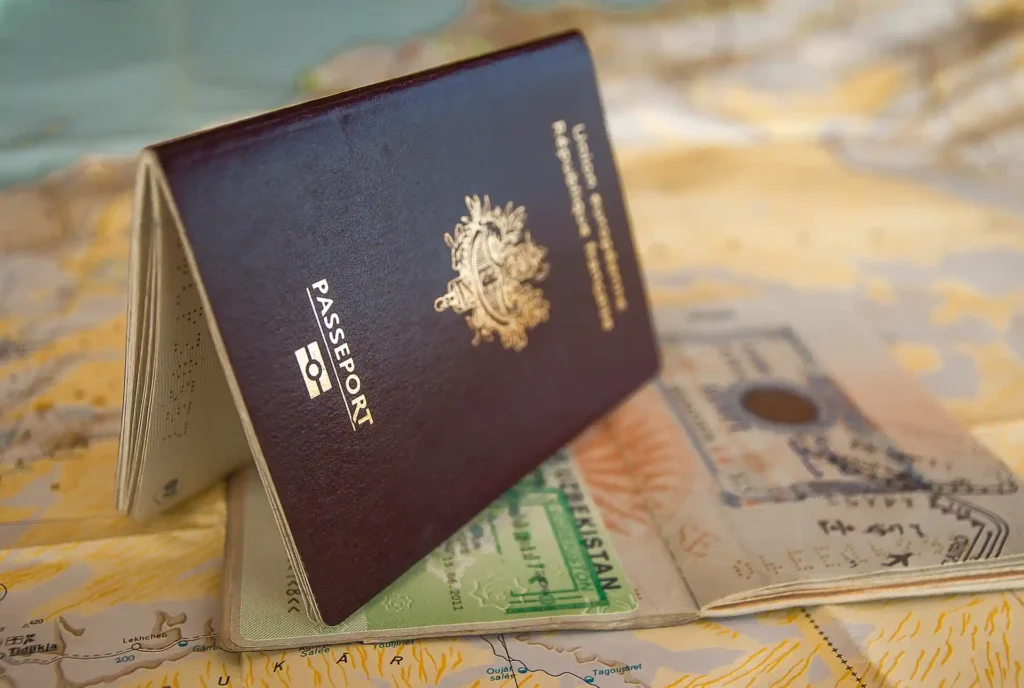
Countries that do NOT require a visa for Uganda include most East African Community member states and a small number of other nations. Citizens of the following countries can enter Uganda visa-free:
Burundi, Comoros, Eritrea, Fiji, Kenya, Madagascar, Malawi, Mauritius, Rwanda, Seychelles, Singapore, Somalia, South Africa, Sudan, Tanzania, Zambia, and Zimbabwe.
If your country is not on this list, you will need a visa. For the most up-to-date list of visa-exempt nationalities, we recommend checking directly with the Uganda Directorate of Citizenship and Immigration Control, as this list is subject to change.
Types of Uganda Visas
Uganda offers several visa categories depending on the purpose and duration of your visit. For gorilla trekking tourists, the most relevant options are as follows:
Single Entry Tourist Visa This is the most common visa for visitors coming to Uganda for leisure, gorilla trekking, or wildlife safaris. It allows a single entry into Uganda and is valid for a stay of up to 90 days from the date of entry. The single entry tourist visa costs USD 50 for most nationalities.
East African Tourist Visa This is by far the best option for travellers combining Uganda with Rwanda and Kenya on a single trip — which many gorilla trekking visitors do. The East African Tourist Visa allows multiple entries across Uganda, Kenya, and Rwanda within a 90-day period and costs USD 100 per person. It represents outstanding value compared to purchasing three separate visas and is particularly useful for travellers who enter through Kigali and cross into Uganda by road to reach Bwindi.
The East African Tourist Visa can be applied for online through any of the three countries’ immigration portals. We strongly recommend it for any client combining gorilla trekking in Uganda with time in Rwanda or a Kenyan safari.
Multiple Entry Tourist Visa The multiple entry visa allows unlimited entries into Uganda over a 90-day validity period and costs USD 100. This is useful if your itinerary requires you to cross in and out of Uganda — for example, if you are doing gorilla trekking in both Uganda’s Bwindi and Rwanda’s Volcanoes National Park as part of a combined safari.
Transit Visa If you are passing through Uganda to another destination and will be in the country for less than 72 hours, a transit visa may be appropriate. Transit visas cost USD 30 and are single entry only.
Diplomatic and Official Visas Holders of diplomatic or official passports from certain countries may be entitled to complimentary or expedited visas. Check with the nearest Uganda embassy or high commission for specific guidance.
How to Apply for a Uganda Visa
Uganda has three main methods of obtaining a visa. We strongly recommend the e-visa route for all international visitors as it saves time, reduces uncertainty, and means your visa is confirmed before you board your flight.
Method 1: Uganda E-Visa (Recommended)
Uganda’s online e-visa system is efficient, straightforward, and available to citizens of most countries. Applying online means your visa is approved and waiting for you when you land — all you need to do is present your passport and visa approval letter at the immigration counter.
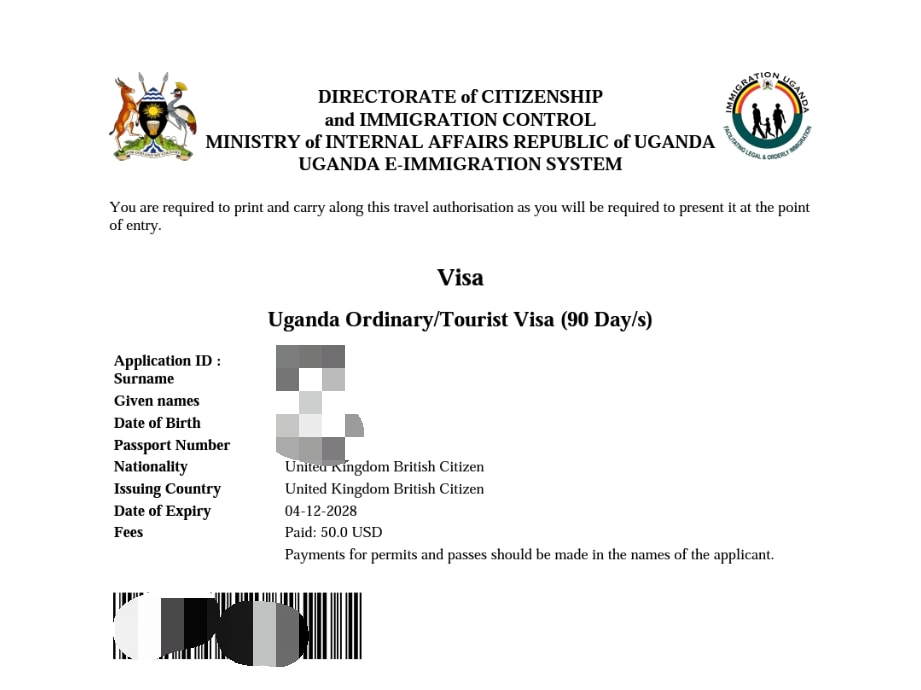
Step-by-Step E-Visa Application Process:
Step 1 — Create an Account Visit the official Uganda e-visa portal at visas.immigration.go.ug and create an applicant account using your email address. Keep your login details safe as you will need them to check your application status and download your visa approval letter.
Step 2 — Complete the Application Form Fill in the online application form carefully. You will be asked for personal details, passport information, your travel dates, your address in Uganda (your lodge or hotel will do), and the purpose of your visit. Double-check every detail before submitting — errors can cause delays or rejection.
Step 3 — Upload the Required Documents You will need to upload scanned or high-quality digital copies of the following:
- Your passport biographical page (must be valid for at least 6 months beyond your intended date of departure from Uganda)
- A recent passport-sized photograph with a plain white background
- Your return or onward flight ticket
- Your yellow fever vaccination certificate (mandatory for entry into Uganda — more on this below)
- Proof of sufficient funds for your stay (a recent bank statement is usually sufficient)
- Your accommodation booking confirmation in Uganda
Step 4 — Pay the Visa Fee Pay the applicable visa fee online using a credit or debit card. Uganda accepts Visa, Mastercard, and certain other international payment methods. Keep your payment receipt.
Step 5 — Wait for Approval Processing time for Uganda e-visas is typically 3 to 5 business days, though it can occasionally take longer during busy periods. Apply at least 2 to 3 weeks before your travel date to allow plenty of time for processing and any follow-up requests for additional documents.
Step 6 — Download and Print Your Visa Approval Letter Once approved, log back into your account, download your visa approval letter, and print at least two copies. Present this letter alongside your passport at the immigration counter on arrival. Your physical visa stamp will be placed in your passport at the port of entry.
Method 2: Visa on Arrival
Uganda does offer visas on arrival at Entebbe International Airport and certain designated land border crossings for eligible nationalities. However, we do not recommend relying on this option for the following reasons:
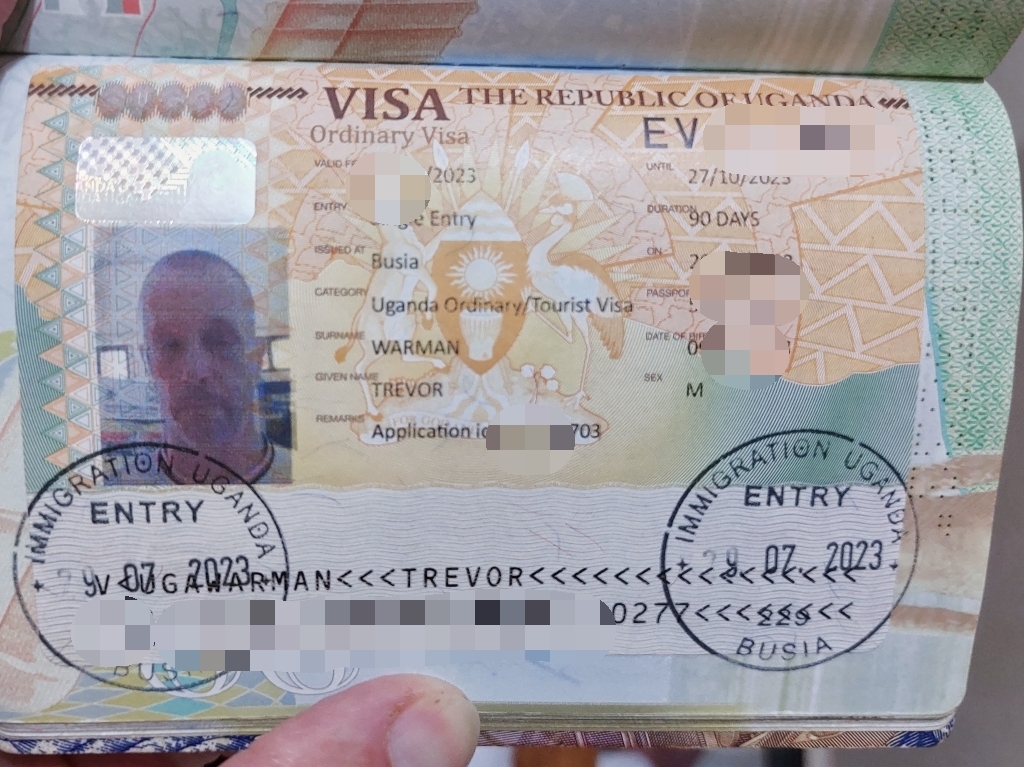
- Visa on arrival queues at Entebbe can be very long, particularly when multiple international flights land simultaneously. Waits of 2 to 3 hours are not uncommon.
- Payment methods accepted on arrival can be limited — cash in US dollars is the most reliable option, but not all border points have card facilities.
- There is always a small risk of complications that could delay your entry, which is the last thing you want after a long-haul flight.
- The e-visa costs exactly the same as the visa on arrival, so there is no financial advantage to waiting.
If you do choose to get your visa on arrival, bring crisp, clean US dollar bills (notes printed after 2006 are preferred). Worn or torn notes are frequently rejected.
Method 3: Through a Uganda Embassy or High Commission
You can also apply for a Uganda visa in person or by post through the nearest Uganda embassy, high commission, or consulate in your home country. This route is less common since the e-visa system launched but may be preferable for travellers in countries with limited internet access or those who need a visa in their passport before travel for other administrative reasons.
Contact the nearest Uganda diplomatic mission for specific application requirements and processing times, as these vary by location.
Uganda Visa Requirements: What You Need
Regardless of how you apply, the following are standard requirements for a Uganda tourist visa:
Valid Passport: Your passport must be valid for at least 6 months beyond your intended date of departure from Uganda. It must also have at least one blank page available for the visa stamp. Check these details carefully before applying — many travellers are turned away at check-in or immigration due to passport issues that could easily have been avoided.
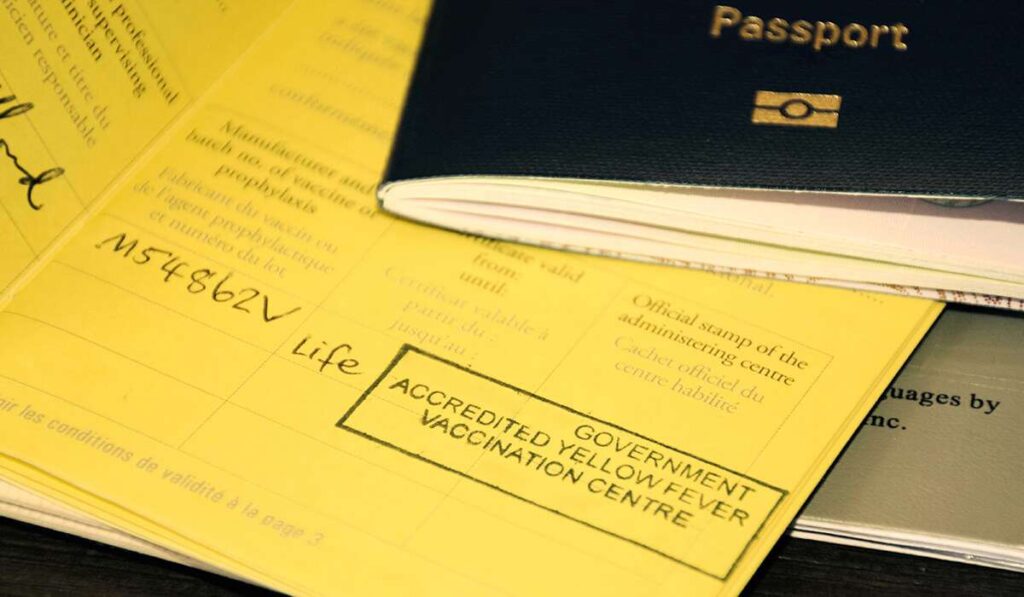
Yellow Fever Vaccination Certificate: This is mandatory for entry into Uganda and is one of the most important documents you will carry on your trip. Uganda requires proof of yellow fever vaccination from all travellers, regardless of nationality or origin. Carry your International Certificate of Vaccination or Prophylaxis (ICVP) — the yellow booklet — with you at all times. If you do not have one, get vaccinated at least 10 days before travel to allow the vaccine to take effect. Without this certificate, you can be denied entry or vaccinated at the airport at your own cost.
Return or Onward Ticket: You will need to show proof of a return or onward flight out of Uganda.
Proof of Accommodation: A confirmed hotel or lodge booking in Uganda.
Proof of Sufficient Funds: Immigration officers may ask to see evidence that you have enough money to cover your stay. A recent bank statement or credit card is usually sufficient.
Gorilla Permit (Recommended to Carry): While not a visa requirement, carrying your gorilla permit confirmation is useful at immigration as it immediately explains the purpose and itinerary of your visit.
How Much Does a Uganda Visa Cost?
Here is a clear breakdown of current Uganda visa fees:
- Single Entry Tourist Visa: USD 50
- East African Tourist Visa (Uganda, Kenya & Rwanda): USD 100
- Multiple Entry Visa: USD 100
- Transit Visa: USD 30
Visa fees are paid in US dollars. The e-visa payment is made online during the application process. Visa on arrival payments should be made in cash — bring exact amounts if possible as change is not always available.
Arriving at Entebbe International Airport
Entebbe International Airport (EBB) is Uganda’s main international gateway, located on the shores of Lake Victoria approximately 40 kilometres from Kampala. All major international flights into Uganda arrive here.
On arrival, the process is as follows:
First, if you applied for an e-visa, proceed directly to the immigration hall and join the e-visa queue — separate from the visa on arrival queue, which is usually longer. Present your passport and printed visa approval letter to the immigration officer. They will verify your documents, ask a few standard questions about your visit, and stamp your passport.
You will also be asked to present your yellow fever vaccination certificate. Keep it accessible — do not pack it in your checked luggage.
After clearing immigration, collect your luggage from the baggage carousel and proceed through customs. Uganda Gorilla Tours provides airport meet-and-greet services for all clients — our representative will be waiting in the arrivals hall with your name on a sign, ready to transfer you to your Kampala hotel or directly towards Bwindi depending on your itinerary.
The East African Tourist Visa: Perfect for Gorilla Trekking Combinations
If you are planning to combine gorilla trekking in Uganda with time in Rwanda — as many of our clients do — the East African Tourist Visa is essential reading.
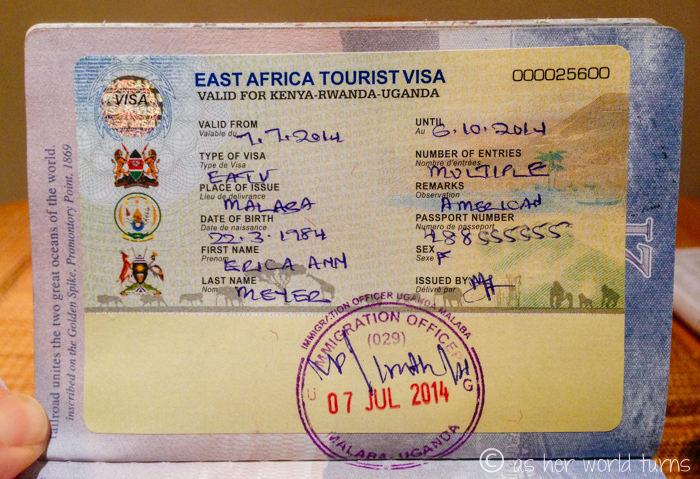
For USD 100, this visa grants you multiple entries across Uganda, Kenya, and Rwanda within a 90-day window. This is particularly valuable for gorilla trekking itineraries because:
Many international flights into East Africa land at Kigali International Airport in Rwanda, from which it is just a 4 to 5 hour drive to Bwindi’s southern sectors. With the East African Tourist Visa, you can fly into Kigali, drive across the Cyanika or Katuna border into Uganda, do your gorilla trekking at Bwindi, and then return to Rwanda for a Rwanda gorilla trek or city time in Kigali — all on a single visa.
Alternatively, many travellers fly into Nairobi, do a Kenyan safari, cross into Uganda, trek gorillas at Bwindi, and fly home from Entebbe — all covered by one East African Tourist Visa.
How to Apply for the East African Tourist Visa: You can apply through Uganda’s e-visa portal at visas.immigration.go.ug. Select the East African Tourist Visa option during the application process. The same document requirements apply as for the standard tourist visa. The visa is issued by whichever country you apply through and is valid across all three member states.
Yellow Fever: Uganda’s Non-Negotiable Entry Requirement
Yellow fever vaccination deserves its own section because it is the single most commonly overlooked entry requirement for Uganda — and the consequences of arriving without it can be severe.
Uganda is a yellow fever endemic country, and all arriving passengers must present a valid International Certificate of Vaccination or Prophylaxis (ICVP) showing proof of yellow fever vaccination. There is no grace period, no exemption for most nationalities, and no workaround.
If you arrive without your yellow fever certificate, you may be:
- Vaccinated at the airport at your own expense before being permitted to enter
- Denied entry entirely in some cases
The yellow fever vaccine is given as a single injection and provides lifelong protection (the World Health Organisation removed the 10-year booster requirement in 2016, meaning a single vaccination is valid for life). Get vaccinated at a certified travel health clinic and ensure your ICVP booklet is stamped and signed correctly. Allow at least 10 days before travel for the vaccine to become effective.
Carry your yellow fever certificate in your hand luggage alongside your passport — never in checked baggage.
Other Health and Entry Considerations
COVID-19: Uganda’s COVID-19 entry requirements have been largely lifted. However, requirements can change, and we recommend checking the latest guidance from Uganda’s Ministry of Health and your own government’s travel advisory before departure.
Travel Insurance: Uganda does not require travel insurance for entry, but we strongly recommend comprehensive travel insurance that covers medical evacuation for all gorilla trekking visitors. Medical facilities in remote areas near Bwindi are limited, and evacuation insurance provides crucial peace of mind.
Currency: Uganda’s currency is the Uganda Shilling (UGX). US dollars are widely accepted for major transactions such as gorilla permits and lodge bills. Bring clean, post-2006 US dollar bills for ease of use.
Malaria Prevention: Uganda is a malaria-endemic country. Consult your doctor or travel health clinic about appropriate antimalarial medication before you travel. Use insect repellent and sleep under a mosquito net, particularly in lower-altitude areas.
Visa Extension in Uganda
If you wish to stay in Uganda beyond your initial visa validity, you can apply for a visa extension at the Uganda Directorate of Citizenship and Immigration Control offices in Kampala or at regional immigration offices. Extensions are granted at the discretion of immigration officers and are not guaranteed. Apply well before your current visa expires — overstaying a Uganda visa carries fines and can complicate future entry.
Common Uganda Visa Mistakes to Avoid
After many years helping international clients travel to Uganda for gorilla trekking, these are the most common visa-related mistakes we see:
Leaving the application too late. The e-visa typically takes 3 to 5 business days but can take longer. Apply at least 2 to 3 weeks before travel, not the night before your flight.
Passport expiry issues. Many travellers do not realise their passport expires within 6 months of their travel date until they are at the airport. Check your passport expiry date right now — before you read another line of this article.
Forgetting the yellow fever certificate. It is mandatory. Keep it with your passport from the moment you receive it.
Using the wrong photograph. Your visa photo must be recent, have a plain white background, and show your full face clearly. Selfies and casual snapshots are not acceptable.
Not printing the e-visa approval letter. Your e-visa is not automatically visible to immigration officers — you must present the printed approval letter. Print at least two copies and keep them in separate bags.
Booking flights before securing a gorilla permit. This is not a visa mistake but it is equally important — gorilla permits determine your travel dates, not the other way around. Secure your permit first, then book flights around it.
How Uganda Gorilla Tours Can Help
Navigating the Uganda visa process is straightforward when you know what to do — but it adds yet another layer of pre-trip planning to an already busy to-do list. At Uganda Gorilla Tours, we provide comprehensive pre-travel guidance to all our clients, including step-by-step visa application support, yellow fever and health requirement advice, gorilla permit procurement, airport transfers, and complete safari itinerary planning.
We want your journey to Uganda to begin smoothly and joyfully — and that starts with getting the paperwork right. Our team is available to answer any visa or travel documentation questions you have before you make your booking.
Uganda is waiting. The gorillas are waiting. Let us take care of the details.
Get in touch with us today to start planning your Uganda gorilla safari.
📧 info@ugandagorillatours.com 📞 +256-700135510
Uganda Gorilla Tours — Uganda’s Gorilla Trekking Specialists
Visa requirements, fees, and regulations are subject to change. Always verify current requirements with the Uganda Directorate of Citizenship and Immigration Control or your nearest Uganda embassy before travel. This guide is accurate as of the time of publication and is intended as a general reference only.