
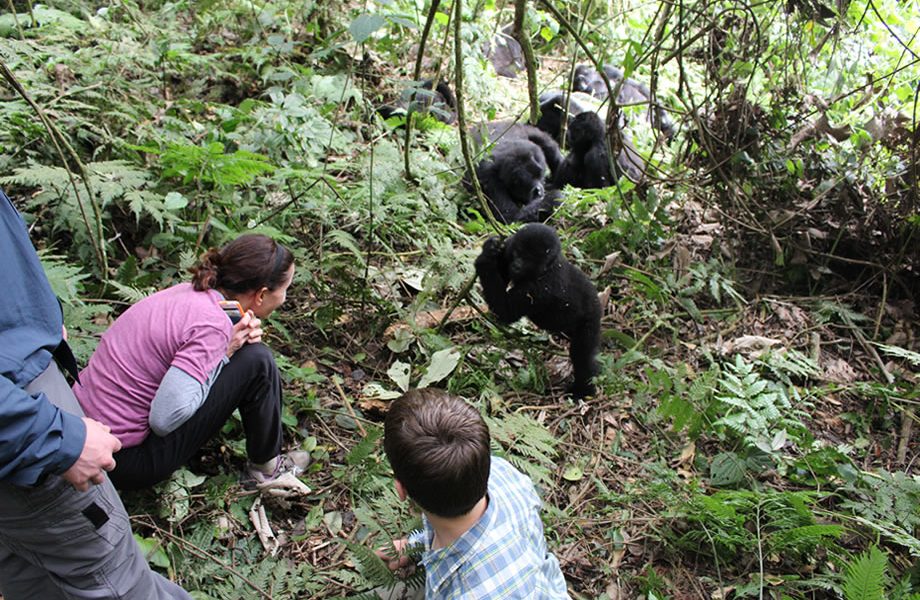
Uganda is one of only three countries on Earth where you can trek through misty rainforest to sit within a few meters of a wild mountain gorilla family. It’s also, by most measures, the most affordable and accessible of the three. But because permits are limited, tightly regulated, and often booked months in advance, a little planning goes a long way. Here’s how to do it right, from first decision to the moment you step into the forest.
Step 1: Understand What You’re Booking
A gorilla trekking experience in Uganda is built around a permit, issued by the Uganda Wildlife Authority (UWA). The permit is what actually gets you into the forest with a habituated gorilla family — everything else (flights, lodging, transport, guides) is built around securing and using that permit.
Two parks in Uganda offer gorilla trekking:
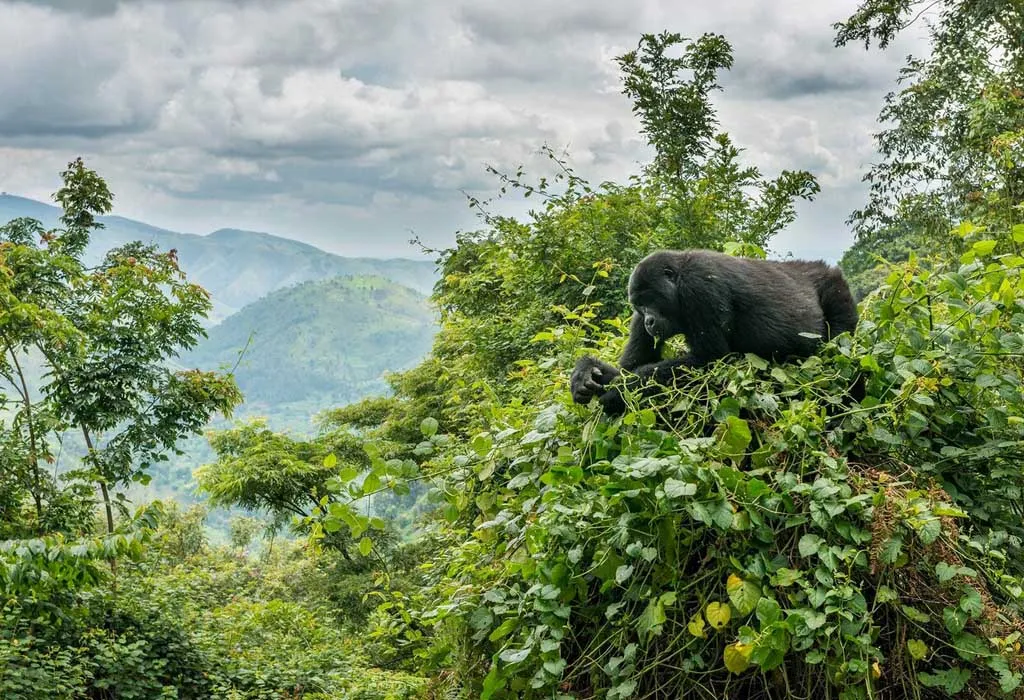
- Bwindi Impenetrable National Park — the main event, with the vast majority of Uganda’s habituated gorilla families spread across four trekking sectors: Buhoma (most accessible, closest to Entebbe/Kampala), Ruhija (highest elevation, quieter), Rushaga (most families, borders Rwanda), and Nkuringo (remote, dramatic volcano views).
- Mgahinga Gorilla National Park — Uganda’s smallest park, with just one habituated family and far fewer visitors, making it a good option if you want an intimate experience or are combining the trip with volcano hikes.
You’ll also choose between two permit types:
- Standard trekking permit — one hour with a habituated gorilla family, after a hike that can range from 1–8 hours depending on where the gorillas are that day.
- Gorilla habituation permit — a longer, four-hour experience with a family still being habituated to human presence, alongside researchers and trackers. Fewer people per group, more time, higher price.
Step 2: Budget for the Permit
Permit pricing is set by UWA and has shifted over the past couple of years, including new seasonal pricing introduced in 2026. As of now, expect roughly this structure for the standard permit (always confirm current pricing with UWA or a licensed operator before booking, since rates and seasonal discounts can change):
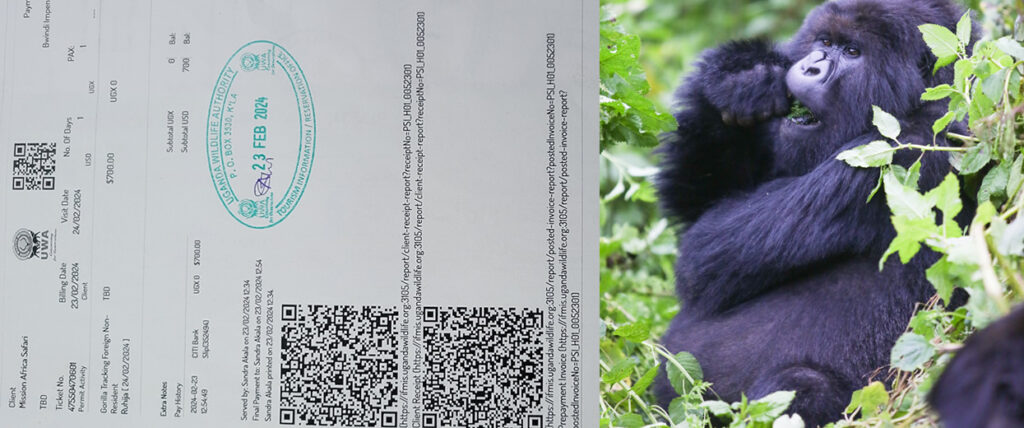
- Foreign non-residents: around $800 per person in high season
- Foreign residents of Uganda: a discounted rate, typically requiring proof of residency
- East African Community citizens: a much lower rate, paid in Ugandan shillings
- Gorilla habituation permit: priced well above the standard trek, reflecting the longer experience
Some operators report lower-cost permits during Uganda’s quieter rainy months (typically April, May, and November), while others note this discount has been phased in and out over time — so treat any specific seasonal number you read as provisional and double-check it directly with UWA or your operator before you commit.
The permit fee isn’t pure profit for the park: a meaningful share is reinvested into gorilla conservation, park management, and the communities living around the park boundary, which is part of why Uganda’s gorilla population has been recovering.
Step 3: Decide When to Go
Gorilla trekking happens year-round in Uganda, since the gorillas don’t migrate and habituated families are tracked daily regardless of season. That said:
- Dry seasons (roughly June–September and December–February) bring firmer trails and easier hiking, and are the most popular — meaning permits sell out faster and lodges fill up.
- Wet seasons (particularly April, May, and November) mean muddier, more strenuous trails, but fewer crowds, greener scenery, and sometimes lower permit costs.
If your schedule is flexible, booking in a shoulder or wet-season month can make last-minute planning easier and cheaper.
Step 4: Book Through a Licensed Tour Operator
Foreign visitors generally cannot buy a UWA permit directly — it has to go through a licensed Ugandan tour operator or agent. This isn’t just bureaucracy: a good operator will also handle logistics that make or break the trip, including:
- Matching you to a trekking sector based on your fitness level and interests
- Arranging transport from Entebbe or Kampala to Bwindi or Mgahinga (roughly a 6–9 hour drive, or a short domestic flight)
- Booking lodging near the park gate
- Handling permit payment and paperwork with UWA on your behalf
When vetting an operator, look for:
- A verifiable UWA partnership or direct booking history
- Transparent pricing that separates the permit cost from the service fee (operators typically add $60–$100 per permit on top of the government fee)
- Recent reviews mentioning gorilla trekking specifically, not just general safaris
Step 5: Reserve and Pay for Your Permit Early
This is the step people underestimate. Only a limited number of permits are issued per day — roughly 8 people per gorilla family, across a limited number of habituated families — so demand regularly outstrips supply in peak months.
- Book 3–6 months ahead for peak season (June–September, December–February).
- Book at least a few weeks ahead for shoulder or wet season, though earlier is always safer.
- Recent policy changes have removed the old “reserve now, pay later” grace period in some cases, meaning full payment may be required at the time of booking — so be confident in your travel dates before you pay, since permits are typically non-refundable and, in some cases, non-reschedulable.
Step 6: Plan Your Itinerary Around the Trek
Most travelers build a broader Uganda itinerary around the gorilla trek itself, since flying in just for one day rarely makes sense given the travel time to Bwindi or Mgahinga. Common add-ons include:
- Queen Elizabeth or Kibale National Park for wildlife and chimpanzee tracking
- Lake Bunyonyi for a relaxing few days near Bwindi
- Mount Sabinyo or Mount Muhavura hikes if you’re already at Mgahinga
- A Batwa cultural trail experience, offered near both parks
Your operator can usually bundle these into a single package alongside the permit and transport.
Step 7: Prepare Physically and Medically
Before you fly:
- Get a yellow fever vaccination — Uganda requires proof of yellow fever vaccination for entry.
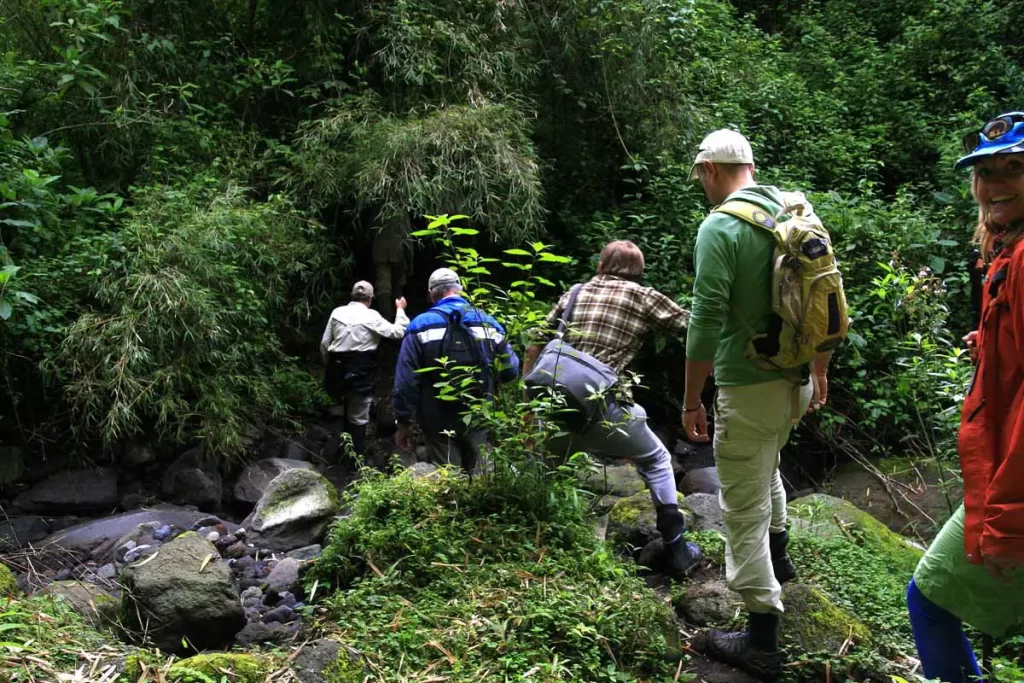
- Check general fitness — treks can involve steep, muddy terrain at altitude, sometimes for several hours before you reach the gorillas.
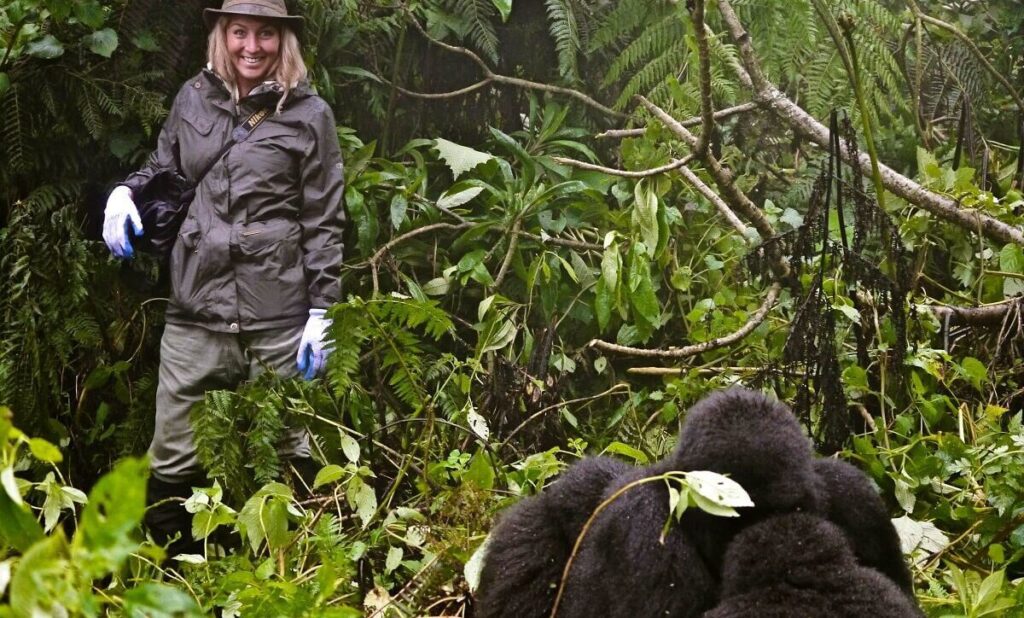
- Pack for the forest: waterproof hiking boots, gardening-style gloves (for grabbing vegetation on steep sections), long sleeves and trousers (for nettles and biting ants, not just weather), a rain jacket, and a daypack with water.
- Be honest about any illness before your trek. Because gorillas share the vast majority of human DNA, they’re highly susceptible to human respiratory illnesses. Rangers can and will turn away visibly sick trekkers to protect the gorillas — this isn’t optional.
Step 8: The Trek Itself
On the day, you’ll arrive at the park headquarters for a briefing (usually around 7–8 AM), get assigned to a specific gorilla family based on your fitness level and preferences, and set out with an armed ranger, a guide, and often local porters (worth hiring — it supports the local community and helps on steep terrain). Once you find the family, you get one hour in their presence, at a respectful distance, before leaving them undisturbed.
Quick Checklist
- [ ] Choose Bwindi or Mgahinga, and a sector if applicable
- [ ] Confirm current permit pricing directly with UWA or your operator
- [ ] Pick your travel dates with season and permit availability in mind
- [ ] Book through a licensed, reputable tour operator
- [ ] Pay for your permit as early as possible — ideally months ahead for peak season
- [ ] Arrange yellow fever vaccination and appropriate trekking gear
- [ ] Build out the rest of your Uganda itinerary around the trek date
Gorilla trekking is one of the few wildlife experiences left that genuinely lives up to the hype — but it rewards travelers who plan ahead rather than those hoping to book it as an afterthought.
To book a gorilla tour in Uganda this season, simply contact us now by sending an email to info@ugandagorillatours.com or call us now on +256-700135510.