
Every year, we hear the same disappointing story from travellers who reach out to us: they picked their dates, spent weeks researching gorilla trekking, and by the time they were ready to commit, their preferred sector was already fully booked. It’s one of the most common — and most avoidable — mistakes in planning an East Africa safari.
Gorilla permits are not like hotel rooms or flight seats. They are a fixed, government-controlled resource that does not expand with demand. Once a date is gone, it’s gone — there’s no wait list, no overbooking buffer, and no second allocation. This guide walks through exactly how gorilla bookings work in 2026, why dates disappear so fast, and the precise sequence of steps that protects you from losing the trek you actually want.
Why Gorilla Bookings Sell Out So Quickly
To understand why timing matters this much, it helps to understand the numbers behind the system.
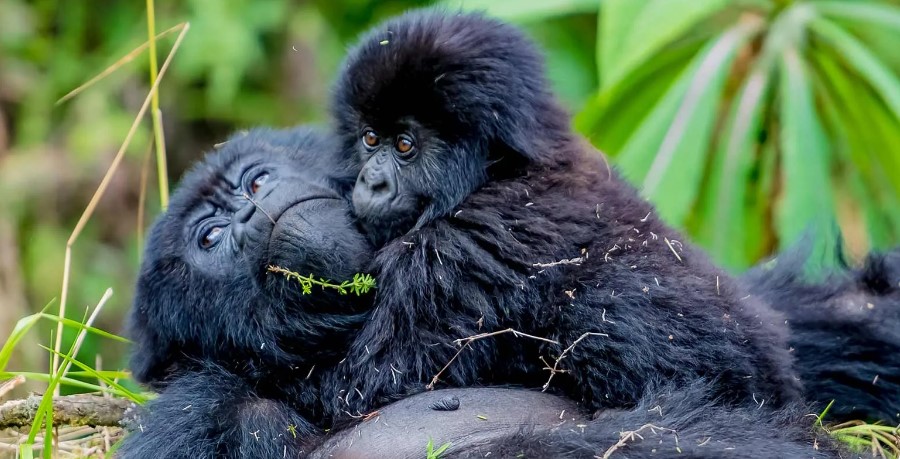
Uganda’s mountain gorilla population is spread across a small number of habituated families — gorilla groups that rangers have spent years acclimatizing to human presence. Each family can only be visited by a maximum of eight trekkers per day, for a strict one-hour visit, regardless of how the trek itself goes.
In Uganda, these habituated families are spread across four sectors of Bwindi Impenetrable National Park — Buhoma, Ruhija, Rushaga, and Nkuringo — plus Mgahinga Gorilla National Park near the Rwanda and DR Congo borders. Rwanda’s entire gorilla trekking program is concentrated in a single park, Volcanoes National Park, home to its own fixed set of habituated families.
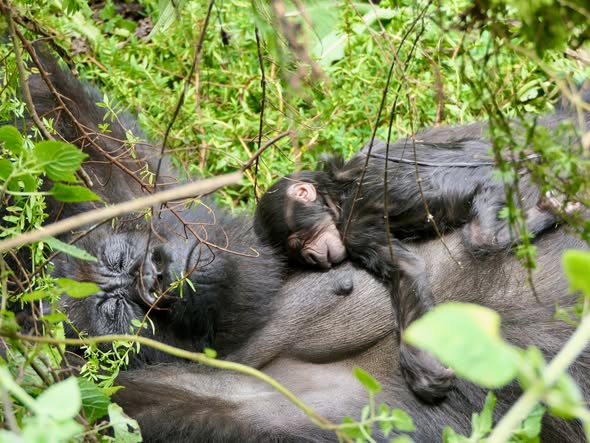
Do the math across either country and you get a hard daily ceiling on permits that simply does not move, no matter how many people want to trek that week. Compare that to a hotel, which can add rooms, or a flight, which can add a bigger aircraft — a gorilla permit system has no equivalent flexibility. That rigidity is precisely why early, deliberate booking behaviour matters so much more here than it does for almost any other part of an African safari.
The Realistic Booking Timeline for 2026
How far ahead you need to book depends heavily on season and sector popularity.
- Peak season (June–August and December–February): Book 3–6 months ahead. These months combine dry trekking conditions with school holidays and year-end travel, and permits in popular sectors routinely sell out this far in advance.
- Shoulder and low season (March–May and September–November): 1–3 months ahead is usually sufficient. These months bring more rain, but also thinner crowds and better availability — some travellers deliberately choose this window for that reason.
- Popular single sectors (especially Rushaga, which has the most habituated families and easy access) or groups of four or more people: Book on the earlier end of these windows regardless of season, since larger groups need more consecutive permits on the same date.
- Rwanda’s Volcanoes National Park: Given it’s a single, smaller park with premium pricing and strong year-round demand from shorter-stay travellers, treat Rwanda bookings with the same urgency as Uganda’s peak season, even outside the traditional dry months.
If you’re reading this less than a month before your intended travel dates, don’t assume it’s automatically too late. Cancellations happen, and permit availability can shift with little notice — it’s always worth asking a local operator to check in real time rather than assuming based on general guidance.
Step 1: Decide on Your Travel Dates Before Anything Else
This is the single most common mistake travellers make, and it happens for an understandable reason: most trip planning starts with flights. You find good fares, book them, and then start looking at what to do on the ground.
For a gorilla trip, this order needs to be reversed. Permits are the scarce resource in this equation — flights are not. Airlines add capacity, adjust schedules, and rarely sell out routes to East Africa a season in advance. Gorilla permits do exactly that.
Before you book a single flight, settle on a window of a few flexible dates rather than one fixed day. If your ideal date is unavailable, having two or three backup dates dramatically increases your chances of securing your preferred sector rather than being pushed into whichever family happens to have space.
Step 2: Understand How the Permit System Actually Works
Uganda’s permits are issued by the Uganda Wildlife Authority (UWA); Rwanda’s by the Rwanda Development Board (RDB). Both operate broadly similar systems:
- Permits are tied to a specific date and a specific gorilla family/sector — not a general “Bwindi permit” or “Volcanoes permit.”
- Full payment is generally required to actually issue and hold the permit in your name.
- Once issued, permits are largely non-transferable to another date, which is why getting your dates right at the outset matters more than almost any other planning decision.
- Both authorities primarily interact with either individual travellers directly (via email and bank transfer) or with licensed local tour operators, who often have a clearer, faster view of real-time availability.
Knowing this distinction matters because it explains why deposits and early confirmation carry so much weight in this system — you are not reserving a generic seat, you are claiming one of eight specific slots for one specific family on one specific day.
Step 3: Choose How You’ll Book — Direct or Through an Operator
You have two realistic paths to a gorilla permit:
Booking directly with UWA or RDB. This avoids any operator service fee and can work well if you’re confident managing international bank transfers, following up by email, and separately arranging your own transport, guide, and accommodation. It typically takes longer to get a clear answer on availability, since you’re working through a general reservations inbox rather than a system built for real-time checking.
Booking through a licensed local tour operator. Operators who work daily with UWA and RDB usually have a faster, clearer picture of what’s actually open, and can check multiple sectors or dates for you in one enquiry. They also bundle the permit with transport, guide, and accommodation — which matters in a country where self-arranging 4×4 transport to remote park sectors is its own logistical challenge. The trade-off is a modest service fee built into the overall package price.
For most international travellers, particularly those combining gorilla trekking with other parks or a Uganda–Rwanda route, working through an operator saves meaningful time during exactly the phase — early booking — where speed protects your preferred dates.
Step 4: Confirm Real Availability Before Committing to Anything Else
Once you have a flexible date window, the next move is checking actual, current permit availability — not just researching general prices and probabilities online. Blog posts and guides (including this one) can tell you when to book; only a direct check with UWA, RDB, or an operator with live access can tell you what’s actually open right now for your specific dates.
This step should happen before you commit to non-refundable flights, apply for visas tied to fixed dates, or pay deposits on accommodation elsewhere in your itinerary. Confirming permit availability first keeps every other part of your trip flexible until the one truly inflexible piece — the permit — is secured.
Step 5: Secure Your Permit With a Deposit — Immediately
This is the step that most often separates travellers who get their preferred dates from those who don’t.
Permit availability is not static — it shifts daily as other travellers and operators book. The moment your preferred date and sector are confirmed as open, a deposit is what actually converts that availability into a held reservation. Taking a week to “think it over,” compare a few more operators, or wait for a better flight price is, in practice, the most common reason travellers lose the exact date they wanted to someone else’s booking.
Because the remaining balance isn’t usually due until closer to your travel date, the deposit itself is a relatively small financial commitment measured against the certainty it buys you — locking in a specific gorilla family, on a specific date, in the sector you actually wanted.
Step 6: Get Everything Confirmed in Writing
A properly completed gorilla booking should leave you with a written confirmation — not just a verbal assurance that “you’re all set.” That confirmation should clearly state:
- Your confirmed permit sector, gorilla family (where applicable), and exact trek date
- Accommodation booked for the corresponding nights
- Transport and guide arrangements
- Payment schedule for any remaining balance
This documentation matters for two reasons. First, it’s your proof of a confirmed permit if anything needs cross-checking later. Second, it’s what you’ll refer back to if any part of your itinerary needs adjusting as your travel date approaches.
Common Mistakes That Cost Travellers Their Preferred Dates
A few patterns come up repeatedly among travellers who end up disappointed with their gorilla booking outcome:
- Booking flights before checking permit availability, then discovering their exact dates don’t align with open permits.
- Treating “I’ll book soon” as good enough during peak season, when a few days’ delay can mean a sector or date disappears entirely.
- Assuming all sectors are equally available. Rushaga, being the most accessible and having the most families, tends to fill first — travellers set on that specific sector need to book earlier than someone flexible on location.
- Underestimating group size complications. Four travellers need four consecutive permits for the same family on the same day — a much narrower target than a solo traveller or couple needs.
- Not providing backup dates, which forces an operator or park authority to say “not available” rather than offering the next-best option.
Avoiding these is largely a matter of sequence: dates and permit availability first, everything else built around that confirmed foundation.
The Bottom Line
Gorilla bookings aren’t complicated, but they are genuinely unforgiving of delay. The system works on a fixed, non-negotiable daily allocation, which means the travellers who get their first-choice sector and date are, almost without exception, the ones who moved through this sequence quickly: settle on flexible dates, confirm real availability, and lock it in with a deposit the moment a match appears.
Follow that order, and you put yourself in the small group of travellers who get exactly the gorilla trekking experience they planned for — rather than whatever was still open by the time they were ready to commit.
If you’d like help checking real-time availability for your dates, see how gorilla bookings work with our team and we’ll confirm your permit options directly with UWA or RDB. To get in touch with us – simply email to info@ugandagorillatours.com or call +256-700135510 to speak/ chat with the reservations team.